Welcome to Our Company



Gulf gear oil
120 INR/Liter
Product Details:
- Use Reduces friction and wear in gear systems
- Color Clear to Amber
- Ash % <0.02%
- Density 0.88 Gram per cubic centimeter(g/cm3)
- Smell Characteristic Petroleum Odor
- Operating Temperature -15C to 120C
- Oil Type Mineral
- Click to View more
X
Gulf gear oil Price And Quantity
- 120 INR/Liter
- 20 Litters Liter
- 120.00 - 1200.00 INR/Liter
Gulf gear oil Product Specifications
- Characteristic Petroleum Odor
- -15C to 120C
- <0.02%
- 0.88 Gram per cubic centimeter(g/cm3)
- Clear to Amber
- Reduces friction and wear in gear systems
- <0.1%
- Drum size dependent; typically 210 liters (approx. 185 kg drum)
- Gear Oil
- SAE 90 (Assumed Common, Confirm Product Variant)
- Used in manual transmissions, gearboxes, and differentials
- Steel Drum
- Automotive, Commercial, Industrial Gears
- No, Liquid Oil
- Barrel / Drum
- 210 Liters (Drum)
- Mineral
- Highly refined base oils with selected additives
- Suitable for use in hypoid, spiral bevel, and helical gear units
- >200C
- Extreme Pressure (EP) additives, anti-wear, anti-corrosion
- Not considered hazardous under normal use
- 5 years in original, unopened packaging
- Store in cool, dry place, away from direct sunlight
- -27C
- VG 220 (Typical for Gear Oils)
- Low foaming
Product Description
The specifications of Gulf gear oil can vary depending on the specific product line and application. However, here's a general overview of what you might expect to find in a product specification for Gulf gear oil:
-
Viscosity: Gear oils are classified by their viscosity, typically measured at different temperatures. Viscosity determines the oil's ability to flow and lubricate effectively under different operating conditions.
-
API Classification: The American Petroleum Institute (API) assigns classifications to gear oils based on their performance characteristics. Common classifications include GL-4, GL-5, and MT-1.
-
SAE Grade: Similar to motor oils, gear oils are also graded by the Society of Automotive Engineers (SAE) based on their viscosity characteristics at specific temperatures.
-
Performance Ratings: This could include any industry-standard performance ratings or certifications, such as those from the American Gear Manufacturers Association (AGMA) or Original Equipment Manufacturer (OEM) approvals.
-
Base Oil Type: Gear oils can be formulated using different base oil types, such as mineral oil, synthetic oil, or a blend of both. The base oil type affects factors like thermal stability, oxidation resistance, and load-carrying capacity.
-
Additive Package: This refers to the specific additives blended into the gear oil to enhance its performance characteristics. Common additives include anti-wear agents, rust and corrosion inhibitors, friction modifiers, and extreme pressure (EP) additives.
-
Operating Conditions: The specification may include information on the recommended operating conditions for the gear oil, such as temperature range, load capacity, and gear type compatibility (e.g., hypoid gears).
-
Compatibility: Information on compatibility with different seal materials, elastomers, and metals commonly found in gear systems.
-
Environmental Considerations: Any information regarding biodegradability, eco-friendliness, or compliance with environmental regulations.
-
Storage and Handling: Guidelines for proper storage and handling of the gear oil to maintain its performance characteristics and prevent contamination.
These specifications ensure that the gear oil meets the necessary requirements for its intended application, whether it's automotive, industrial, marine, or another specialized use. Always refer to the specific product datasheet or technical documentation
Superior Protection for Gears
Gulf gear oil is engineered to minimize friction, reduce wear, and protect critical gear components under high-load conditions. Its advanced EP additive technology ensures long-lasting performance and shields against oxidation, rust, and corrosion-extending the life of manual transmissions, gearboxes, and differentials.
Reliable Performance in Extreme Conditions
With a high flash point and low pour point, Gulf gear oil maintains optimal viscosity and protective properties across a wide operating temperature range from -15C to 120C. Its formulation prevents foaming, ensuring consistent lubrication and protection in both high-speed and heavy-duty gear units.
Convenient Packaging for Industrial Needs
Gulf gear oil is available in robust 210-liter steel drums, supporting efficient storage, handling, and transport. This makes it ideal for distributors, suppliers, and traders catering to extensive automotive and industrial gear maintenance operations throughout India.
FAQ's of Gulf gear oil:
Q: How should Gulf gear oil be stored to maintain its quality?
A: Store Gulf gear oil in its original, unopened steel drum in a cool, dry place, away from direct sunlight to ensure optimal shelf life and consistent performance.Q: What gear systems are suitable for using Gulf gear oil VG 220?
A: This oil is recommended for use in hypoid, spiral bevel, and helical gear units found in automotive, commercial, and industrial equipment, particularly manual transmissions, gearboxes, and differentials.Q: When should I change the Gulf gear oil in a gearbox or differential?
A: Refer to the manufacturer's maintenance schedule, but typically it's advisable to inspect and possibly replace gear oil every 40,000-60,000 kilometers or during routine maintenance to ensure peak protection and efficiency.Q: What are the main benefits of using Gulf gear oil with EP additives?
A: EP additives significantly enhance the oil's ability to protect gears from wear, pitting, and scoring under heavy loads, extending component lifespan and reducing maintenance costs.Q: Is Gulf gear oil environmentally hazardous to handle under normal use?
A: No, Gulf gear oil is not considered hazardous under normal use conditions, but it's always recommended to follow safety guidelines and dispose of used oil responsibly.Q: Can Gulf gear oil VG 220 be used in high-temperature industrial applications?
A: Yes, with an operational temperature range of -15C to 120C and a flash point above 200C, it is suitable for high-temperature applications, providing reliable lubrication and oxidation stability.Tell us about your requirement

Price:
Quantity
Select Unit
- 50
- 100
- 200
- 250
- 500
- 1000+
Additional detail
Mobile number
Email

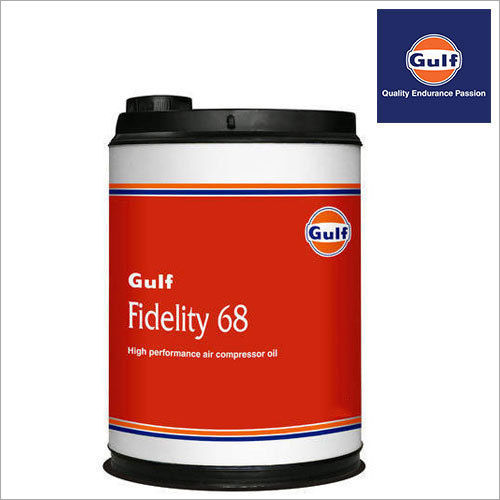
Other Products in 'Gulf Fidelity 68 Compressor Oil' category

We want inquires mainly from Tamil Nadu, Kerala, Andhra Pradesh, Pondicherry, Karnataka.
GST : 33ASVPM2212M1ZH
Contact Details

- D.No 339/1, Sundara Gounder Thottam, Sanganoor Road, Jayaprakash Nagar, Ganapathy,Coimbatore - 641006, Tamil Nadu, India
- Phone : 08045479794

- Mr Mohamed (Sales Manager)
- Mobile : 08045479794
 Send Inquiry
 Send SMS
 Call Me Free
JESCO ENERGY
All Rights Reserved.(Terms of Use)
Developed and Managed by Infocom Network Private Limited.
Developed and Managed by Infocom Network Private Limited.


